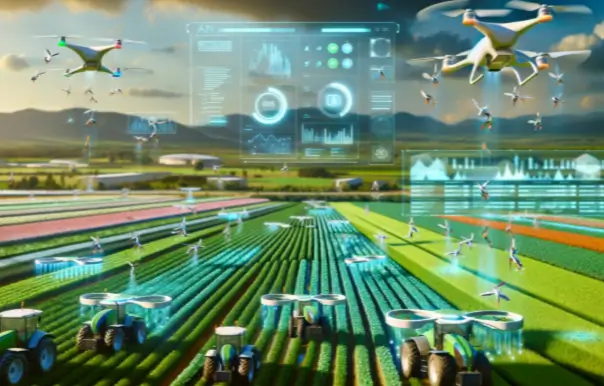

AI in precision agriculture combines sensor networks, remote sensing, and weather modeling to optimize inputs. It enables soil, water, and crop analytics that inform irrigation, fertilization, and pest management. Drone imagery and phenotyping support field-scale assessments, while governance and change-management address adoption challenges. Real-world deployments show scalable gains and data-driven ROI across crops and climates. The question remains: how do these systems translate into practical, measurable improvements on a specific farm?
What AI Brings to Precision Agriculture
AI brings data-driven rigor to precision agriculture by converting diverse field signals into actionable insights. The analysis integrates sensor data, imagery, and weather models to optimize inputs, reduce waste, and enhance yields.
AI ethics shapes transparency and accountability in model use. AI governance frames stakeholder responsibilities, risk assessment, and regulatory alignment, ensuring responsible deployment without restricting innovation or farmer autonomy.
AI-Driven Precision Practices for Soil, Water, and Crops
Precision management integrates soil physiology, hydrology, and crop physiology through AI-enabled sensing, modeling, and decision systems. AI-driven practices optimize resource use via soil analytics, targeted irrigation, and variable-rate inputs. Water forecasting and real-time sensor data support proactive management. Crop phenotyping informs stress detection and yield potential, while drone analytics enable rapid field-scale assessment and decision support, enhancing operational freedom with measurable gains.
See also: mahabocw
Real-World AI Applications and Case Studies
Real-world deployments illustrate how AI translates sensor streams, remote sensing, and agronomic data into actionable decisions across diverse farming systems.
The analysis emphasizes quantitative performance and scalability, with case study comparisons highlighting yield, input efficiency, and risk reduction.
Findings indicate robust transferability across crops and climates, while limitations include data gaps and edge-case variability that guide future refinement.
Barriers, Buy-In, and How to Start With AI in Your Farm
Barriers to adopting AI in farming commonly arise from data quality, cost of implementation, and organizational readiness, yet these hurdles can be quantified and mitigated with a structured framework.
The analysis focuses on barrier mitigation through standardized data governance, scalable pilot programs, and transparent ROI metrics.
An adoption strategy emphasizes stakeholder alignment, phased investment, and measurable performance, enabling practical, data-driven AI integration on diverse farming operations.
Frequently Asked Questions
How Is Data Privacy Protected in Agricultural AI Systems?
The answer: Data privacy is protected through encryption, access controls, and federated learning, while model security measures defend against tampering and leakage; audits, provenance tracking, and rigorous risk assessments quantify potential vulnerabilities and inform resilient, data-driven practices.
What Are Costs and ROI Benchmarks for AI Adoption?
Adoption costs vary widely, with early adopters reporting 2–5x ROI over 3–5 years; one statistic notes a 30% reduction in input costs. Costs and ROI hinge on data quality, integration, and operational alignment, amid adoption barriers.
Which Crops Benefit Most From AI in Farming?
Corn and other commodity crops show strong benefits from AI in farming, with notable improvements in corn yield and targeted management via drone scouting, enabling data-driven decisions that appeal to producers seeking freedom through optimized resource use.
How Do AI Insights Translate to Actionable Field Actions?
Actionable field actions arise when AI insights translate into precise prescriptions, scheduling interventions, and resource optimization, enabling farmers to adjust irrigation, fertilization, and pest control; data-driven decisions empower autonomous, adaptable, and freedom-minded field management.
What Training Is Required for Farm Staff to Use AI Tools?
Training prerequisites vary, but typically include foundational data literacy and crop-specific knowledge; hands on workflows emphasize system navigation, interpretation of outputs, and decision logging, enabling staff to independently validate results while maintaining scalable, data-driven practice.
Conclusion
AI-augmented precision agriculture delivers measurable gains in resource use, yield stability, and risk management by integrating soil, water, and crop analytics with weather-informed decisions. Demonstrated case studies show scalable ROI across crops and climates. An anticipated objection—implementation cost and disruption—can be mitigated by phased deployment, interoperable data standards, and clear KPIs. Visually, firms can map a layered workflow: sensor inputs and AI models feeding targeted irrigation, fertilization, and pest controls, producing a loop of continuous improvement.